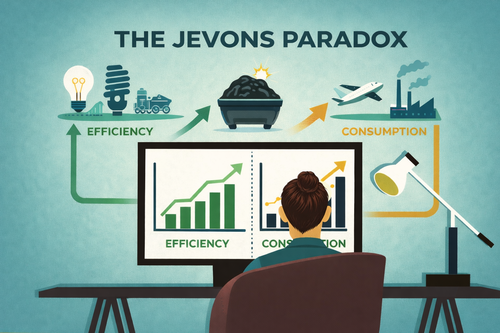
Jevons Paradox: Efficiency That Increases, Not Saves, Energy Use
An introduction to the Jevons Paradox William Stanley Jevons published The Coal Question in 1865, warning that improving the efficiency of coal‑powered steam engines might not reduce coal consumption; it could increase it because cheaper power would spread across more industries and households.1 2 His observation - that making a resource use more efficient can lead to more consumption overall, not less - has become known as the Jevons Paradox, often discussed today under the broader idea of “rebound effects.”3 2